Performance: The Countervoice
In conclusion, every developed (artistic) voice is a counter-voice

Read previous section here.
The Gospel of John is another example of not necessarily a counter-narrative but certainly a complimentary-narrative. However, one could make a case that it is indeed a countervoice within the establishment voice. The Synoptics are an establishment view, following Peter’s lead, interested in the ministry of Jesus among the disciples in the areas of Jewish Palestine, while John’s voice is much outside the Twelve, where they only even receive cursory mention, suggesting a wider, dynamic and unconsidered perspective of the events of Jesus’ ministry, one that is more sophisticated, urbane, and possibly even more feminine given the host of women eyewitnesses who appear in John’s narrative and really, the presence via absence of Mary herself, who, if John really did take stewardship over her, would have a different perspective than the Twelve who only travelled and knew Jesus for three years while she knew him since birth. This is not to say the Synoptics are tough while John is soft—that’s just stereotyping views of genders. The Synoptics just have different sensitivities and stresses, different notes, than John. But it is even unfair to group the Synoptics together against John. Each one is different in their own way, and the differences are what matter. The differences, the new phenomena, are what make them interesting, just like all new phenomena themselves develop in the stream of lived and sometimes—mostly—familiar experience. The only way to gauge these sensitivities is through the cultivation of them, developing the countervoice or expanding consciousness which the greatest art can provide.
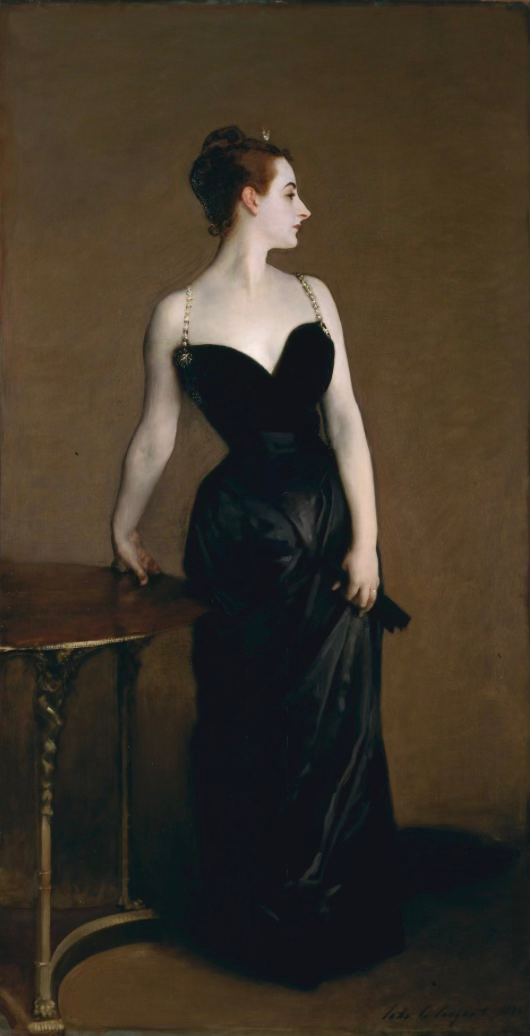
Another way to describe it would be a dedication to pursuing truth, a life dedicated to a freedom that is not tied to organizational, ideological or financial control. An acting to possess an axis more fully. But like an axis, it suggests there are rotational forces, a myriad of influences and motivations, where the experience of life is to stabilize the axis to a degree, which means understanding those forces which rotate. The individual, rebel or dissident represents freedom, the freedom to possess the axis of life, control it to a degree, at least understand it somewhat, rather than being controlled. We mock and disdain those who are controlled, yet we are all controlled in a way, but we admire those who perform through their behaviors and speech that they do indeed possess an axis, an axis rooted in thinking, developing and molding the rotational forces, bringing in to the orbit of the individual axis, the sun of an existential galaxy. Art and its respective performances, the countervoice it presents, helps us listen to our countervoice, assists us in grasping our axis against the chaos of experience. To borrow a metaphor from Ernst Junger in his book The Forest Passage, the countervoice speaks to the internal rebel—not one of a guerilla in the jungle, though at times that may be required, but that of the guerilla present here, now, in city or suburb, the free person uncontrolled by external pressures and in control of themselves.
A little rebellion is always required in this world—one that does not want one to think or wants to control you, even if it is just controlling your purchasing choices by force of habit, making you think it is your choice. And this freedom cannot be attained easily with just a purchase of a product considered “rebellious” or by listening to “rebellious music” or by tattooing oneself with rebellious imagery on the skin or by wearing clothes to be “different”—no, rebellion comes in the conscientiousness of encountering and developing ideas, tastes and philosophy—developing consciousness—against the rotational and counter rotational forces of life. This may mean understanding or even embracing the common or “mid” at least understanding its appeal, dressing in the most plain way as to go unnoticed, an urban camouflage, disavowing uniqueness as to better comprehend the whole, being able to discern that the paean’s to rebellion may indeed be masked paean’s to conformity. We can’t help but be rebels in this sense as our experience and consciousness developed individually is ours and ours alone and not of others, yet somehow forged in the fires of community life. The problem with strictly religious, ideological or scientific understandings of experience is they are generic understandings of experience, dare one say, mechanized experiences?
“And as he thought of the little details he had picked up in the biographies of Collins, of Aldrin, of Armstrong, he thought that yes, the invasion of the moon was signal to commence his new psychology…for they were either the end of the old or the first of the new men, and one would have nothing to measure them by until the lines of the new psychology had begun to be drawn,” Norman Mailer wrote in Of a Fire on the Moon, about the first moon landing. Mailer wrote with a more hesitant, less awed view of the space program than Tom Wolfe would in The Right Stuff 10 years later. He wrote with a sense that the space program represented the loss, or at least degradation, of something artistic, something romantic. Mailer’s literary “war” was always a war between primal being and the mechanization of life, and this book signals that it may have been a losing battle. Humans, like Junger noted, during the rise of Nazi Germany, took on a mechanized character (and never forget the Nazis helped mid-wife the space program).
In 1977, eight years after Mailer wrote his book, film critic Stanley Kauffmann wrote of Star Wars: “This picture was made for those (particularly males) who carry a portable shrine within them of their adolescence, a chalice of a Self that was Better Then, before the world’s affairs or—in any complex way—sex intruded. Flash Gordon, Buck Rogers and their peers guard the portals of American innocence, and Star Wars is an unabashed, jaw-clenched tribute to the chastity still sacred beneath the middle-aged spread.” The portable shrine of innocence, so present in today’s fan culture, seems almost an outgrowth of the market, technology-based consumer economy. An economy based on plastic products, left pure from the impurities of life itself, where everything is clear and understandable in a plot that is clearly structured, the heroes and villains clearly delineated—even in the movies and comic books. But my countervoice speaks! Yes, yes, yes, I started my artistic exploration because of Star Wars, Kung Fu movies, and comic books. Yes, I even still patronize comic stores and fan conventions while looking at and even collecting a few Transformers with my daughter. Guilty! But, but, but, the other voice, the other part says, there’s more, always something more, yes, that minority within me speaks too and feels more truthful and at times complimentary. “But that before all my arrogant poems the real Me stands/yet untouch’d, untold, altogether unreach’d” Walt Whitman wrote. Yes, always striving, like Mailer, towards the untouched, the untold, the altogether unreached, as Walt wrote, “I too am but a trail of drift and debris”…
In 1997, 20 years after Star Wars, Fred Dewey wrote in the pages of the notorious art tabloid Coagula: “What if culture, in the sense of caring for things that are and have been made, turns out to be something other than art? What if society and power somehow want culture not to exist, leaving only things? What if the social is at odds with everything that nurtures, facilitates, and secures our world? What if what we call ‘culture’ has become merely the ravenous life process of society, and nothing more?”
Dewey it seems was on to something. Through the development of digital technology, the so-called “information age”, it seems the only thing technology and capitalism can deliver together is information. The role of art in the 2020s seems different than the role of art in the 1920s or 1820s. Art seems more insular than ever, while the greater “culture” at large just produces waste at worst or information at best. Information always negating previous information, creating its own form of waste. The predominant form of writing is blogging and at best, journalism, just as the predominant form of viewing is social media, where all media just seems to be information. The conservative view of current literature is one of insularity, where in the view of Tom Wolfe (himself a journalist), one is to go out in to the world and record—but record what? Just information? Through blogs and micro-blogs (like X) one can easily record their going out in the world, just like through TikTok and Instagram, one can visually document their going out in to the world…while maybe even mentioning their sponsor. If they do write a book or make a movie, it is just mark of going out, a stake down to mark their accomplishment, the content really does not matter. It’s just more information, the technological becoming. The shrine of innocence grows, and its place, the void usually filled by art, that which helps give meaning to the world, is filled by more stuff, information, ideology and politics.
Maybe the terrorists won on 9/11, maybe they accomplished the goal of the romantics—didn’t Karlheinz Stockhausen call it a great work of art?— giving us a new horizon upon which to look at the world, one where our most valuable asset is our data, our information, and machines powered by artificial intelligence process said information to determine whether we are worthy of liquidation or not, and it seems the appetite for information only grows. Maybe the futurists are right, maybe the “singularity” is upon us.
The artist is displaced. But the artist is always displaced—why else would they be an artist? Someone in place has no need to explore their space. Which means art, a phenomena of displacement, always has a corrupted perspective—it can’t attain the place of space or at least fully comprehend it. The two experiences are disconnected. Most American art, at least since Melville, was always concerned with space. “Shall a man lose himself in countless masses of adjustments, and be so shaped with reference to this, that, and the other, that the simply good and healthy and brave parts of him are reduced and clipp’d away, like the bordering of box in a garden?” Whitman wrote. The artist is needed at the very least to give us a clue to what is missing.
As William James wrote, in regard to the sub-conscious, that the “thing we name has no existence out of our mind” meaning the artificial intelligence, is only processing something created, enfolded within our organic intelligence: “Take a sentence of a dozen words, and take twelve men and tell to each one word. Then stand the men in a row or jam them in a bunch, and let each think of his word as intently as he will; nowhere will there be a consciousness of the whole sentence”, technology and its algorithms are but one word in the sentence of life. It will never be the complete sentence. As John wrote at the end of his Gospel: “Now there are also many other things that Jesus did. Were every one of them to be written, I suppose that the world itself could not contain the books that would be written.” The singular experience of John with Jesus could barely be expressed and even understood (Jesus’ post-resurrection form in chapter 21 still defies understanding, though John did his best to describe it). The holy numerology that John used isn’t to suggest his narrative is perfect but that he just conveyed the most perfect amount of examples to communicate his obdurately uncommunicable experience he pondered for his entire life. All he could do was perform. It’s all we can do.
Even if the singularity occurs and machines understand all “culture” and all language, taking over and laying waste to everything, humans may return to their primitive state and maybe, definitely, someone, maybe many, will write something on a cave wall, or surface, something new, something to solve a new communication problem, that no machine will understand because the person themselves, the primitive artist, might not understand it either.
But this will not happen. Apocalyptic vistas are for some reason the desire of many modern artists. Big brother may be watching but little brother is always hiding. Our fear of control and devastation may secretly be our desire for it. Art will not save us from the devastations of war, poverty, hunger, crime, loneliness and sex but it may help us become more human which in turn may change something. “But do your work, and I shall know you,” Emerson wrote. To be known suggests an intimacy (the word “know” is used in the Bible to describe the sexual act), suggests vulnerability, exposure and possible, even likely, pain. People will confront your art and discard it, either willingly or unwillingly, but maybe because it confronts them, they may carry it their heart as a shrine, a reminder of something ineffable, a wounded innocence, yet a movement towards a perceptive growth. Maybe they will even forget your name, but the experience of your art will become an imprinted text regardless, the work may survive while you die, but all seeds must die in order to produce a harvest.
So do your work and we will know you. It is all we can do. And, really, that’s enough.
Thank you for reading Performance.